Taylor Friedrich · 12 September 2026
Navigating Interconnected Authority Signals in Evolving Digital Networks
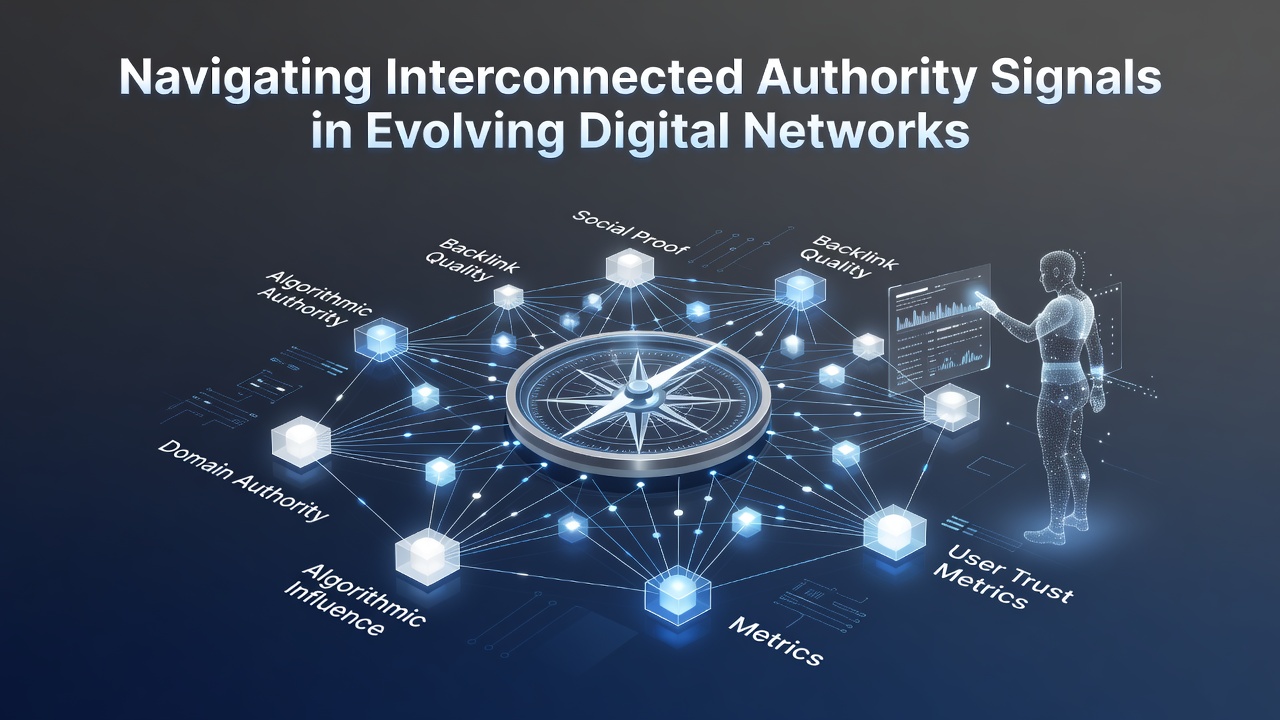
Digital networks continue to expand through layers of data exchange where authority signals determine visibility and trust across platforms, and researchers track these signals through graph-based models that connect domains, citations, and user interactions into measurable patterns. Studies from institutions like the OECD indicate that these signals operate as weighted connections rather than isolated metrics, with algorithms evaluating relevance through multiple pathways simultaneously while updates in network protocols reshape how signals propagate over time.
Core Elements of Authority Mapping
Authority in digital environments relies on several interconnected components including domain-level trust scores, content citation networks, and social endorsement layers, and data from academic analyses shows these elements combine through shared infrastructure such as content delivery systems and API integrations. Observers note that when one signal strengthens, adjacent signals often adjust in response because the underlying graphs treat authority as a distributed property across nodes rather than a fixed attribute of any single source.
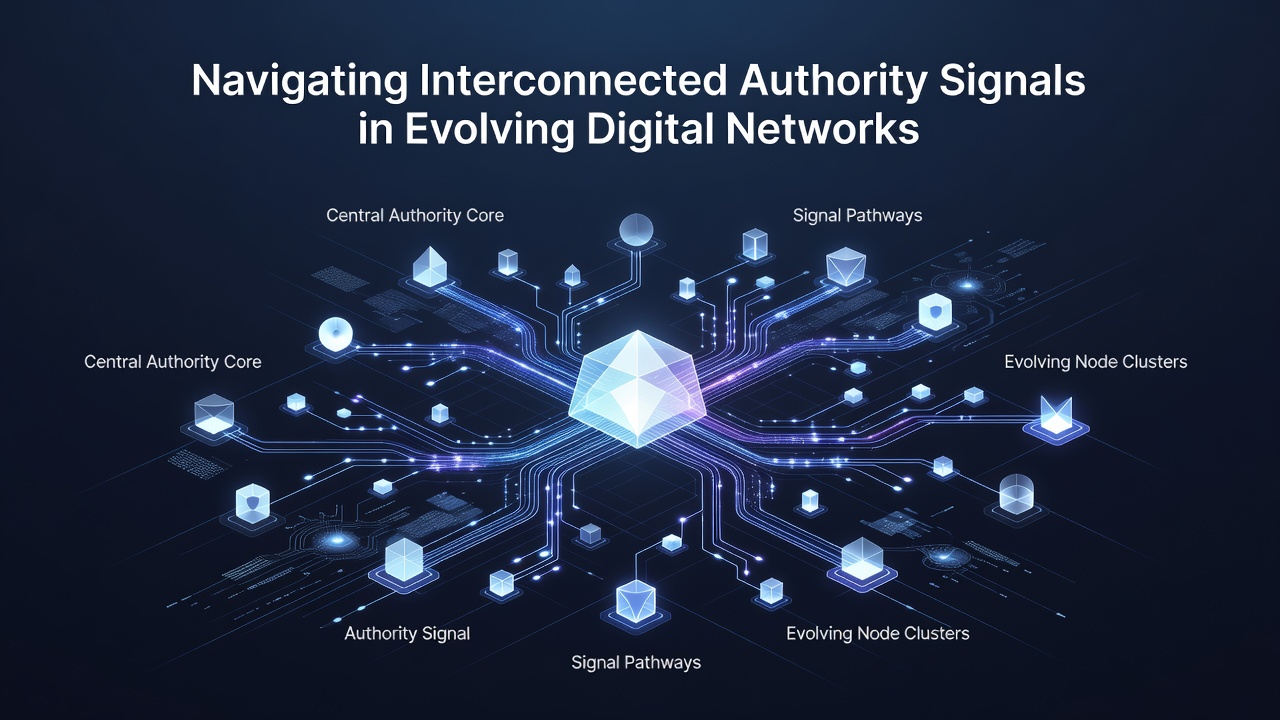
Take the case of enterprise platforms that integrate multiple verification methods; experts observe that combining structured data markup with external references creates denser connection clusters, which in turn influence how search systems rank results in evolving indexes. Figures from recent network studies reveal that clusters with higher interconnectivity maintain stability even when individual links fluctuate, whereas sparse configurations show greater volatility during algorithm recalibrations.
Shifts Observed Through 2026
By September 2026, several infrastructure changes are scheduled to affect how signals travel between systems, particularly as new standards for verifiable credentials and decentralized identifiers gain wider adoption across commercial and governmental networks. Reports from the Internet Society highlight that these standards aim to reduce reliance on centralized registries while preserving audit trails that allow downstream applications to validate origin and history without repeated manual checks.
Network operators have already begun testing hybrid models that blend traditional link-based authority with cryptographic attestations, and preliminary results suggest faster convergence times when signals cross multiple verification layers. Yet the transition also introduces new variables because legacy systems must maintain compatibility during phased rollouts, creating temporary inconsistencies that monitoring tools track through anomaly detection routines.
Practical Navigation Approaches
Organizations managing online presence address these dynamics by mapping their own signal profiles against competitor graphs and adjusting content distribution accordingly, while data indicates that diversified reference patterns yield more resilient authority scores over extended periods. Teams often examine referral pathways through log analysis and third-party crawlers to identify which connections contribute measurable weight in current indexing cycles.
One documented approach involves maintaining parallel verification streams, such as pairing canonical URLs with corresponding entries in knowledge bases, because cross-referenced entries reinforce each other during periodic graph updates. Research from university-led projects demonstrates that entities employing such redundancy experience fewer ranking disruptions when isolated signals weaken due to external factors like domain migrations or policy shifts in aggregator platforms.
Measurement and Monitoring Practices
Monitoring tools aggregate data from multiple endpoints to produce composite authority views, and practitioners rely on time-series comparisons to distinguish short-term fluctuations from structural changes in the underlying networks. According to analyses published by the National Institute of Standards and Technology, consistent sampling intervals combined with statistical smoothing techniques improve the reliability of trend detection across heterogeneous data sources.
These practices extend to regulatory contexts where digital service frameworks require transparency in how platforms surface authoritative content, prompting developers to embed logging mechanisms that record signal provenance without exposing proprietary ranking logic. Entities operating across regions coordinate these efforts because differing compliance requirements affect which signals receive priority treatment in local network segments.
Conclusion
Interconnected authority signals form the operational backbone of modern digital networks, and ongoing evolution in standards and infrastructure continues to alter how these signals interact and stabilize. Entities that track component relationships through systematic mapping and diversified verification maintain clearer visibility into performance shifts, while coordinated monitoring supports adaptation as new protocols integrate into existing frameworks.